
CipherFair: Turning Cryptology into a Hands-On STEM Experience
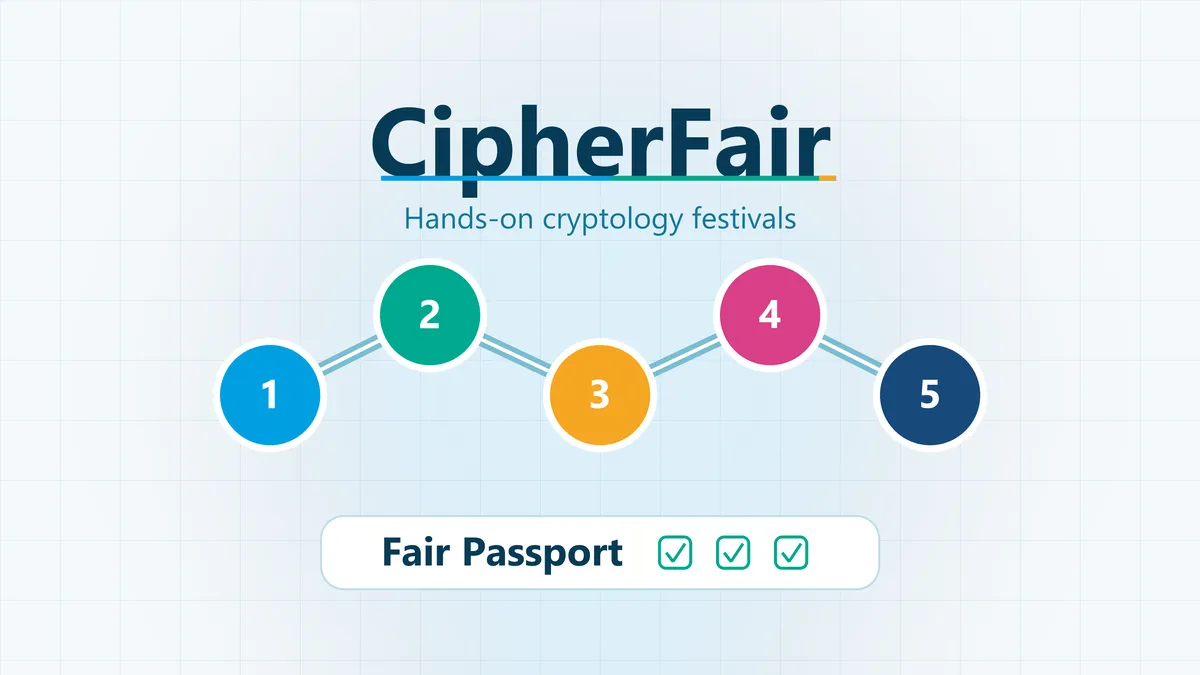
As part of the CipherEngine Project, Infalia has prepared the methodological framework for CipherFair, a hands-on festival format designed to bring cryptology, cybersecurity and digital safety closer to students.
From Guidelines to a Festival Format
CipherFair is built as an active learning environment. Students move through interactive stations, solve short challenges, work with project materials and connect cryptology concepts to everyday digital life.
The framework gives organizers a shared structure for:
- Preparing venues, schedules and attendee flow.
- Designing 4-6 self-contained interactive stations.
- Connecting each activity to CipherEngine outputs such as the booklet, videos, learning activities and chatbots.
- Briefing volunteers and local STEM educators.
- Collecting feedback and activating a local network after the event.
This common backbone reduces duplicated preparation work while leaving enough room for each partner to adapt the fair to its national context, school calendar, audience size and available venue.
What Visitors Experience
The heart of CipherFair is a sequence of station-based activities. Each station is designed around a short hook, a hands-on challenge, a clear connection to the project materials and a small feedback step.
The proposed station themes cover the core journey of the project:
- What is cryptography? Introductory puzzles and activities linked to the first learning materials.
- Symmetric vs asymmetric encryption: Hands-on comparisons that make encryption models tangible.
- The Enigma Machine: Historical cryptography combined with chatbot and learning activity support.
- Cybersecurity and multi-factor authentication: Everyday security choices explained through short practical tasks.
- Privacy and data protection: Activities that help students understand why secure communication matters.
By combining puzzles, video prompts, chatbots and facilitator-led discussion, the format turns abstract concepts into things students can test, decode and explain in their own words.
The Fair Passport
A central part of the methodology is the Fair Passport, a simple gamification mechanism that encourages students to engage with multiple stations.
Rather than receiving a stamp for merely visiting a table, students earn stamps by completing small challenges: solving a mini cipher, answering a question after a video, using a chatbot to retrieve a code word, or encoding a short message with a provided key.
The passport supports bronze, silver and gold levels, depending on how many station activities each participant completes. This keeps the experience flexible for short visits while still rewarding deeper exploration.
Support for Educators and Volunteers
The guidelines also define the operational side of CipherFair. They describe how to prepare facilitators, divide students into pairs or small groups, manage station capacity, avoid bottlenecks and keep activities focused on participation.
Facilitators are encouraged to greet visitors quickly, demonstrate activities briefly, let students do the hands-on work themselves, verify challenge completion and connect each activity back to a real-world cryptology example.
This makes CipherFair useful not only for students, but also for teachers, volunteers and local education stakeholders who want a ready-to-use format for communicating cybersecurity and cryptographic thinking.
Building the Next Layer of CipherEngine
CipherFair gives CipherEngine a concrete dissemination model for its educational results. It brings together the project’s booklets, videos, learning activities and chatbots into one coherent public experience, while giving partners a repeatable approach for national events.
For Infalia, the creation of this framework continues the project’s broader mission: making complex digital security topics understandable, engaging and relevant for young learners.
Learn more about the project at cipherengine.eu.